
This year, Eid al-Fitr arrives in the Gaza Strip under exceptional circumstances. The war has not only altered the geography but has also reshaped the details of daily life, forcing thousands of families into temporary spaces lacking even the most basic stability. Inside the displacement camps, the holiday becomes a harsh test of the Palestinians’ ability to maintain their traditions, even in their most minimal form. The tent is no longer just a temporary shelter; it has become a complete world where the family lives in all its details, despite its cramped and overcrowded conditions, and the different reality it imposes on the meaning of Eid. Abu Yasser Srour, 49, says: “We used to welcome Eid at home by tidying, cleaning, and preparing… My wife would decorate the place, the children would wear new clothes, and they would receive guests. Today, we are in a tent that barely fits us. We try to arrange it, but the feeling is completely different… There is no real sense of Eid.” He adds, his voice heavy with sorrow: “What’s harder than the place is the feeling… It’s like you’re experiencing Eid without its spirit.” Fidaa Abu Mughasib, 38, points out that “the tent can’t accommodate visits or gatherings. Even if we wanted to receive someone, we couldn’t. The holiday used to be all about togetherness… now every family is in its own tent, and that’s what hurts the most.” The rituals that once formed a complete social structure for the holiday have disintegrated within the camps, becoming limited and abbreviated practices. “We used to go out after prayers and start visiting houses,” says Ibrahim al-Muzain, 55. “Today, none of that happens. We barely exchange greetings with those around us, and even then, it’s quick.” He adds, “People are exhausted… no one has the energy to celebrate like they used to.” In the displacement environment, basic needs take precedence, relegating the holiday to a secondary concern, as Abu Salim, 52, explains: “We think daily about securing water and food… these are our priorities. The holiday comes later, if there’s any time left. Nevertheless, we try to ensure our children don’t feel it’s just another ordinary day.” In the tents of Gaza, the holiday is no longer a festive occasion but rather an act of resilience. This is how Abu Mahmoud al-Sisi, 60, sees it: “We don’t celebrate like we used to, but we refuse to let the holiday pass like any other day. We try to preserve the spirit… the joy.”
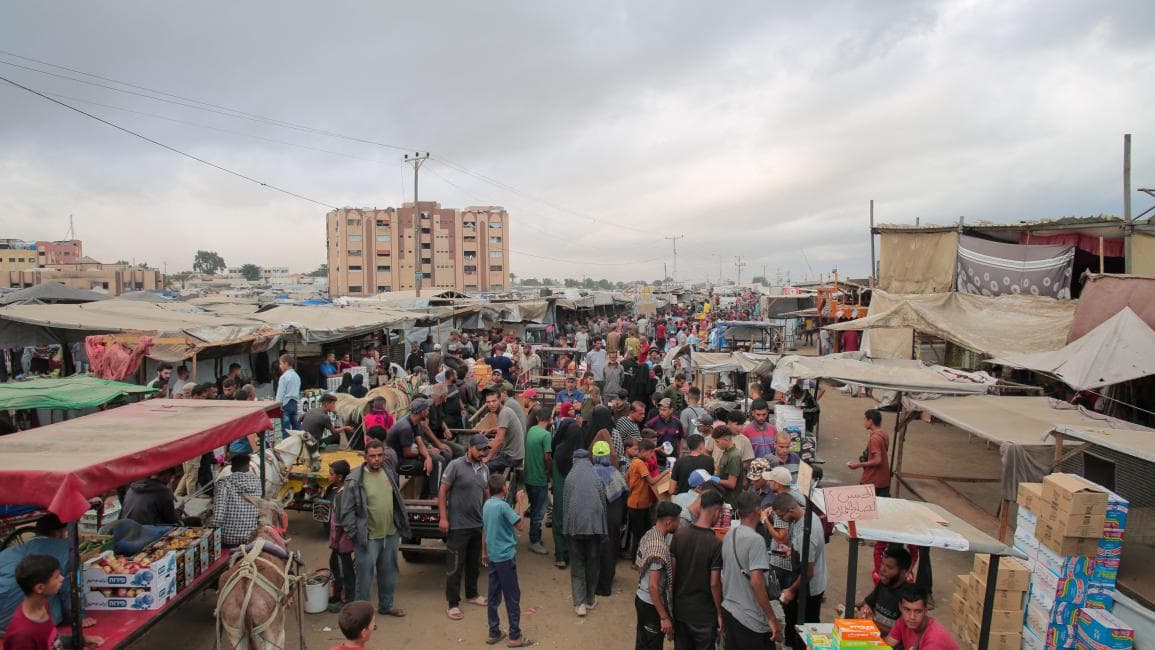
Eid in Gaza tents: truncated rituals and a memory searching for a place
٢٤ مارس ٢٠٢٦
٥٦ مشاهدة
5 دقائق قراءة
كن أول من يعلم!
اشترك في قنواتنا على وسائل التواصل الاجتماعي لتصلك أهم وأحدث أخبار تهامة واليمن العاجلة فور حدوثها.
التعليقات (0)